
Inside Simpson County Property Tax Records
Simpson County property tax records begin with the PVA's January 1 assessment and run through the Sheriff's billing and collection. The PVA sets fair cash value. The PVA also keeps the certified tax roll. Rates come from the taxing districts. The Sheriff applies those rates and collects the current bills, and once a bill turns delinquent, the County Clerk becomes the office that matters. The split is worth remembering, because an assessment, a tax bill, and a delinquent certificate are related records, not interchangeable copies.
| Tax record item | What the entry means | Official keeper |
|---|---|---|
| Fair cash or assessed value | PVA opinion of value as of January 1 for the annual roll | Simpson County PVA |
| Taxable value | Assessment after an applicable exemption reduces the taxable base | Simpson County PVA |
| Owner name | Generally the January 1 owner, which may lag a later sale | PVA roll and tax bill |
| Bill and payment status | Current amount, collection stage, and portal status | Simpson County Sheriff |
| Delinquent certificate | Unpaid obligation transferred after the current collection period | Simpson County Clerk |
Numbers that look alike mean different things here. A deed's consideration is a transaction figure. The assessment is the PVA's annual value conclusion. Taxable value reflects whatever exemptions apply, and the resulting bill is a calculation rather than a forecast of a sale price. Anyone comparing Simpson County property tax records should keep the January 1 valuation date beside any later closing date.
The January 1 Owner and Value Snapshot
The Simpson County PVA marks January 1 as the assessment date. It also posts the current certified tax roll. Kentucky's property-tax calendar uses that same date for ownership and valuation. So a June buyer can open a bill that still names the January 1 owner. That does not mean the deed failed to record. The roll is right for its snapshot.
Let the assessment date organize the search. Check the PVA year first. Then compare the deed recording date and the bill year. A later deed can be the newer ownership record. The tax roll stays correct for its own date. Two records can disagree without either being wrong. The discipline matters most in an estate transfer or a sale near billing season.
Note: A tax-roll owner line names the assessment-year owner. It never replaces checking the newest deed.
Simpson County's PVA and Sheriff Portals
The PVA links a Schneider qPublic Tax Roll for parcel-level searching. The vendor's general interface advertises search modes for name, address, and parcel ID. An alternate ID search is advertised as well. Not every local option is guaranteed to be enabled, though. Copy the parcel number exactly from any result. Confirm unclear entries with the PVA.
| Possible search key | Verified status | Best practice |
|---|---|---|
| Owner name | Current owner information is advertised; local labels not inspected | Try legal name variants and confirm the roll year |
| Street address | Generic vendor mode exists; Simpson implementation unverified | Try the situs number and street without relying on ZIP |
| Parcel or account | Local syntax was not verified | Preserve punctuation exactly as displayed |
The Sheriff's property-tax page links current bills through PVDNet. That link is the official entry point for a current Simpson County tax bill. Have a parcel number ready. Open the Simpson County PVDNet tax-bill portal.
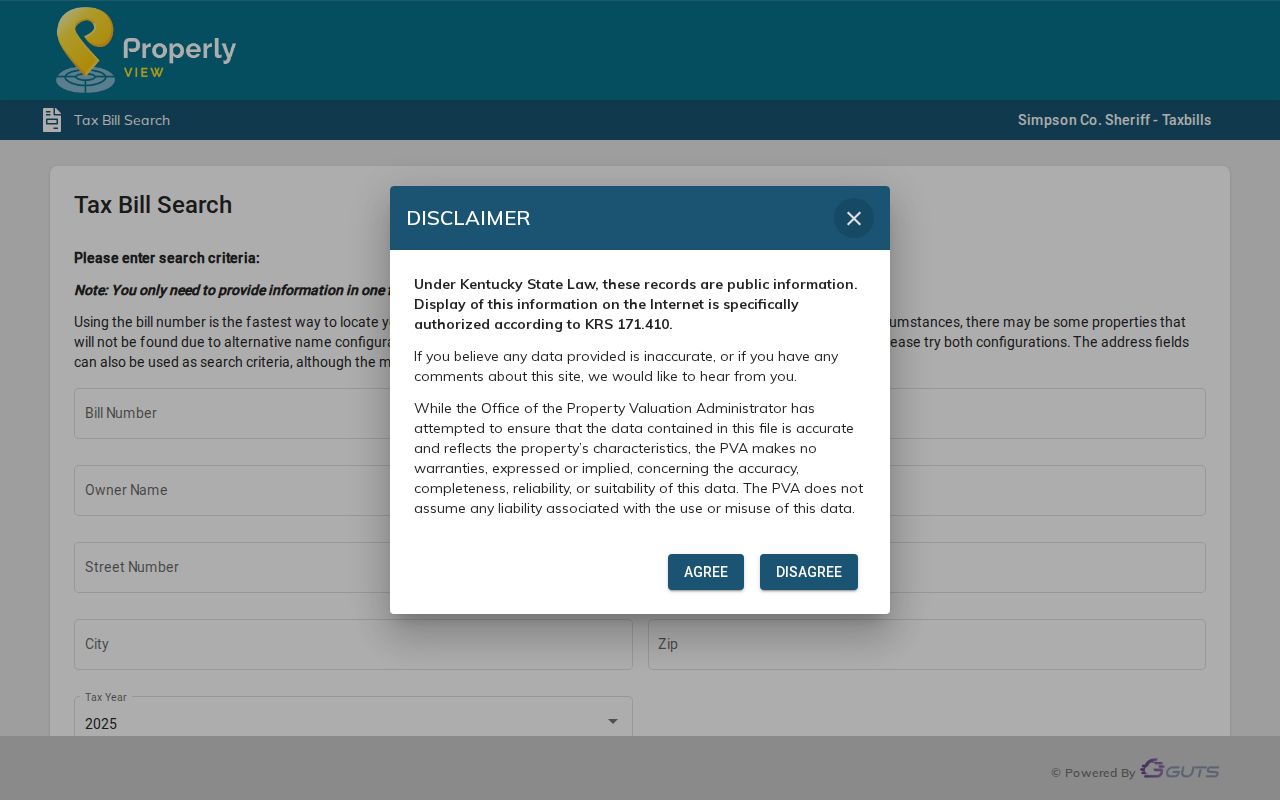
The portal is the official route. Even so, match any result to the parcel and tax year before making a payment decision or filing an appeal.
Look Up a Simpson County Tax Bill
Start with the PVA record. That prevents mix-ups between similarly named owners. A full Simpson County property search then moves to the Sheriff's portal, which answers the current-bill question and collection status in sequence.
- Find the PVA tax-roll entry by the available address, owner, or parcel route and record the exact parcel identifier.
- Open the Sheriff-linked PVDNet portal and match the parcel, owner, and bill year rather than relying on a name alone.
- Compare assessed value with taxable value and identify any exemption shown by the PVA.
- If the current Sheriff channel no longer holds the bill, contact the County Clerk about the delinquent certificate and later process.
- Assessed value
- The PVA's value conclusion for the annual assessment date.
- Tax rate or levy
- The rate adopted by taxing authorities and applied to the taxable base.
- Homestead exemption
- A qualifying reduction in taxable assessed value, not a change to title.
- Tax lien
- A claim arising from unpaid property tax; confirm its present status with the responsible custodian.
Call or visit when online access fails. The PVA holds the assessment, and the Sheriff holds the current bill. Kentucky's Open Records Act, through KRS 61.874 and KRS 61.880, sets inspection, copy, and written-response rules. Name the parcel, year, and document.
Homestead Relief in the 2025-26 Cycle
Kentucky DOR set the 2025-26 homestead exemption at $49,100. Qualifying homeowners must meet age or disability rules. The amount is recalculated every two years. The DOR homestead guidance explains eligibility and the local PVA application route, while Form 62A350 collects the owner, residence, ownership basis, and approval details.
The application deadline is December 31. An exemption lowers the taxable assessment. It does not rewrite the deed or set a new market price. Other constitutional exemption classes carry their own standards, described on the Kentucky exemptions page. Ask the Simpson County PVA which form and evidence fit the claimed class.
When Simpson County Bills Become Delinquent
The Sheriff's current notice covers 2025 bills. Unpaid bills move to the Simpson County Clerk after April 15, 2026. That is a change of channel, not just status. The Sheriff handles current collection. The Clerk administers delinquent tax work after the handoff. A bill that vanishes from the current screen may simply live at the Clerk's office now, so ask there before assuming the obligation disappeared.
Request the parcel, tax year, amount, and current holder or process status. Liens, third-party interests, and tax-sale procedures can add records beyond the face of the original bill. Court involvement, if any, runs through the Simpson County Justice Center. Not every overdue bill becomes a court case.
Current notice. The April 15, 2026 handoff applies to the identified 2025 bill cycle; verify later years with the Sheriff and Clerk.
Reading Kentucky's Tax Calendar
Kentucky's property-tax calendar starts the year with listing and assessment. The Department of Revenue sets the sequence for every county, including Simpson County. Then comes a public inspection period. The real-property tax roll opens for 13 days. It begins the first Monday in May, Saturdays included. Owners can also confer with the PVA during this stretch. Because every deadline turns on these dates, consult the current Kentucky property-tax calendar before planning an appeal. No appeal to the local Board of Assessment Appeals is allowed until the PVA conference happens first.
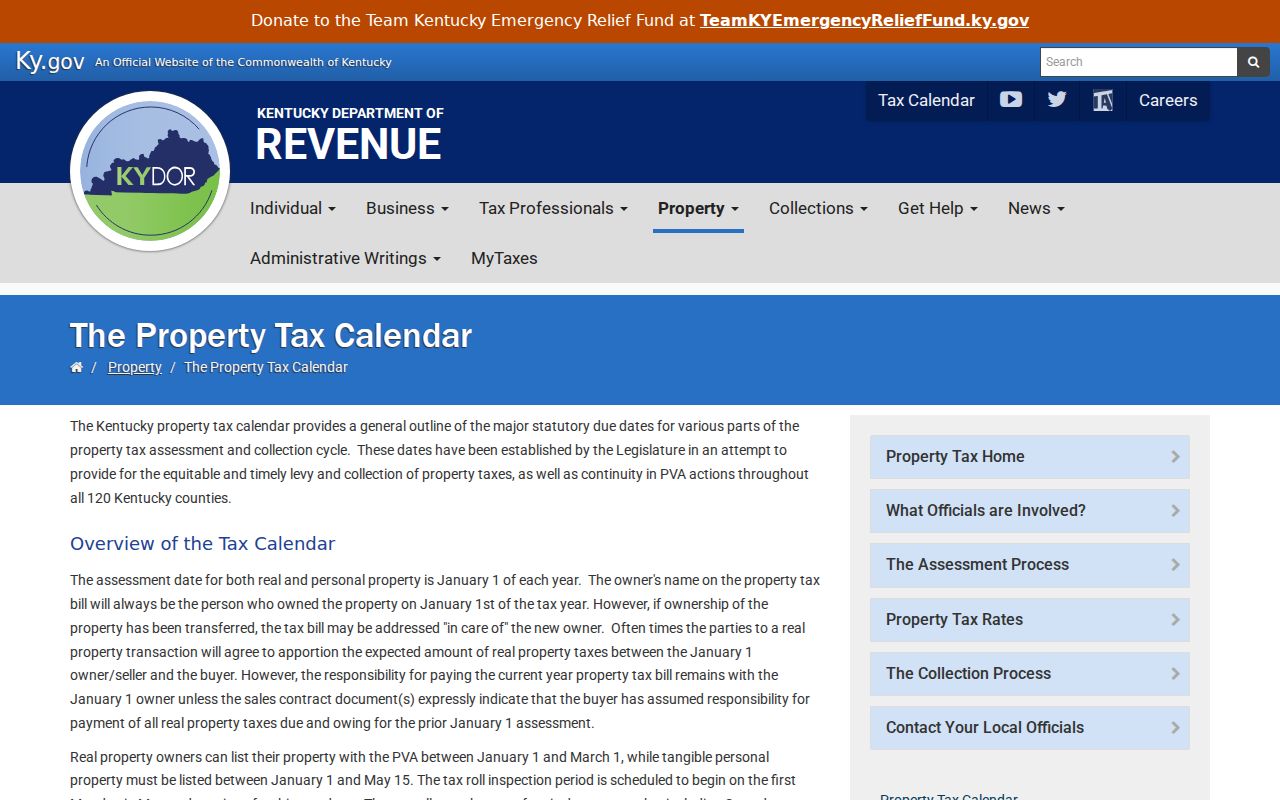
The state calendar is only the framework. The Simpson County PVA can confirm the exact local dates and conference arrangements for the current tax year.
Challenge a Simpson County Assessment
An appeal targets the assessment itself, never the tax rate. Start during the inspection period. Request the parcel's property record and arrange the required PVA conference. Evidence must tie to the January 1 value date. Comparable sales, an appraisal, photographs, and measurements all count. So do records showing the PVA's property characteristics are wrong.
If the conference settles nothing, take the next step. File with the Simpson County clerk for the Board of Assessment Appeals. The deadline is the next workday after the inspection period closes. The board meets for a five-day period beginning 25 to 35 days after inspection ends. That schedule rarely flexes. Preserve copies of the assessment notice, your evidence, the conference result, and proof of filing. Further review follows Kentucky's appeal route rather than the Sheriff. The Sheriff never sets the value.
Appeal window. Conference with the PVA during inspection, then file with the county clerk by the next workday after that period closes.
Get Tax Records When a Portal Fails
A portal is only one channel among several. The PVA page names Alison Smith Cummings and points to the certified tax roll. The Sheriff answers questions about current bills. The County Clerk handles the delinquent stage. Any request should carry the property address. It should also carry the exact parcel number if known, the tax year, and the owner of record's name as shown. Say whether the record wanted is an assessment card, a bill, a payment entry, or a delinquent certificate.
Historic assessment research follows a different trail. The Kentucky Department for Libraries and Archives inventory lists Simpson County tax assessment books. They cover 1882 through 2003. The Simpson County Archives and Museum holds local tax records, deeds, maps, court papers, and family-history material. Old books show what was assessed in a given year. They neither replace a current bill nor prove title.
Note: Ask each custodian which exact record it keeps. One broad request can blur the assessment, billing, and delinquency split.
Separate the Assessment from the Rate
A bigger Simpson County property tax bill can come from a changed assessment, a changed rate, a lost exemption, or several of those at once. Compare the current assessment against the prior one first. Then compare taxable value and taxing jurisdictions. The PVA keeps the valuation record. The rate comes from the taxing authorities, and the Sheriff performs collection. A rate question sent to the PVA, or an assessment challenge sent to the Sheriff, only delays the answer.
Ask for the calculation components printed on the bill instead of assuming one countywide rate applies to every parcel. City location and district assignments can change the math. A Franklin mailing label alone proves nothing about city jurisdiction. Resolve a disputed district through PVA and boundary records. Also keep a copy of the exact bill year under discussion, because portal screens can shift as collection stages advance.
Build a Complete Simpson Tax File
A complete Simpson County tax file serves a purchase, an appeal, or an estate. Start with the PVA parcel card and its assessment year. Add the current Sheriff bill and payment status. Round it out with the exemption entry, the relevant deed, and any Clerk delinquent certificate. Match all of it to the exact parcel number and legal owner name. A recent transfer needs the deed recording date and the January 1 owner noted too. The apparent mismatch is then explained rather than ignored.
Provenance matters. Label each document's source. Sources include qPublic, PVDNet, the PVA counter, Sheriff, Clerk, KDLA, or the local Archives. A portal screenshot shows what appeared on a given date. A formal proceeding may still require a certified or custodian-supplied record. Kentucky's open-records rules permit inspection and copies subject to applicable procedures and exemptions. Request a defined existing record, not an explanation the agency never created.
Historic comparisons reach back further. The assessment books covering 1882 through 2003 stretch past modern portal history. Match older owners through deeds and geographic descriptions. Account systems and street addresses evolve. Those books show the assessment recorded in their own year. They do not show today's amount due or current ownership.