
Run a Simpson Property Search
Start with the PVA, since it ties a street location to the certified tax roll. Use only the controls actually visible on the live site. The Schneider software behind it generally supports searches by owner name, address, parcel ID, and alternate ID, though a vendor menu is no guarantee that every Simpson control is switched on. Simpson property records begin there. If the local form will not load, the PVA counter and phone remain valid access channels. Move exact values between systems. Keep a trust name whole. Never drop an LLC suffix or reshape an unverified parcel format.
- Enter the physical, or situs, address in the Simpson Tax Roll if address mode appears.
- Open the matching account and copy the parcel number and owner name exactly.
- Carry the exact owner name to the County Clerk's eCCLIX land-record route.
- Check the current bill, zoning map, permits, and inspections only as the question requires.
- Ask the custodian for a copy when an image, result, or older book is not online.
Search Simpson Property by Address
The street address is the best starting point. That is true when a parcel is known only by where it sits. Search with the property location, never the owner's mailing address. A Franklin postal label does not prove the land sits inside city limits, and a ZIP Code is postal geography, not title evidence. Boundary questions belong with Planning, the zoning map, PVA data where shown, and official boundary filings.
When a road name or number fails, fewer search terms often work. The PVA office can also help. For old property history, keep the legal description close, since addresses change over time. Simpson was carved from Allen, Logan, and Warren Counties, with a later Logan County cut-off. So older instruments may sit in a parent county's deed records.
Simpson PVA Search Modes
The PVA advertises a current certified tax roll with ownership information and property characteristics where available. Exact labels, match rules, and result columns vary by county. The Schneider enterprise screen shows the vendor's general search modes.
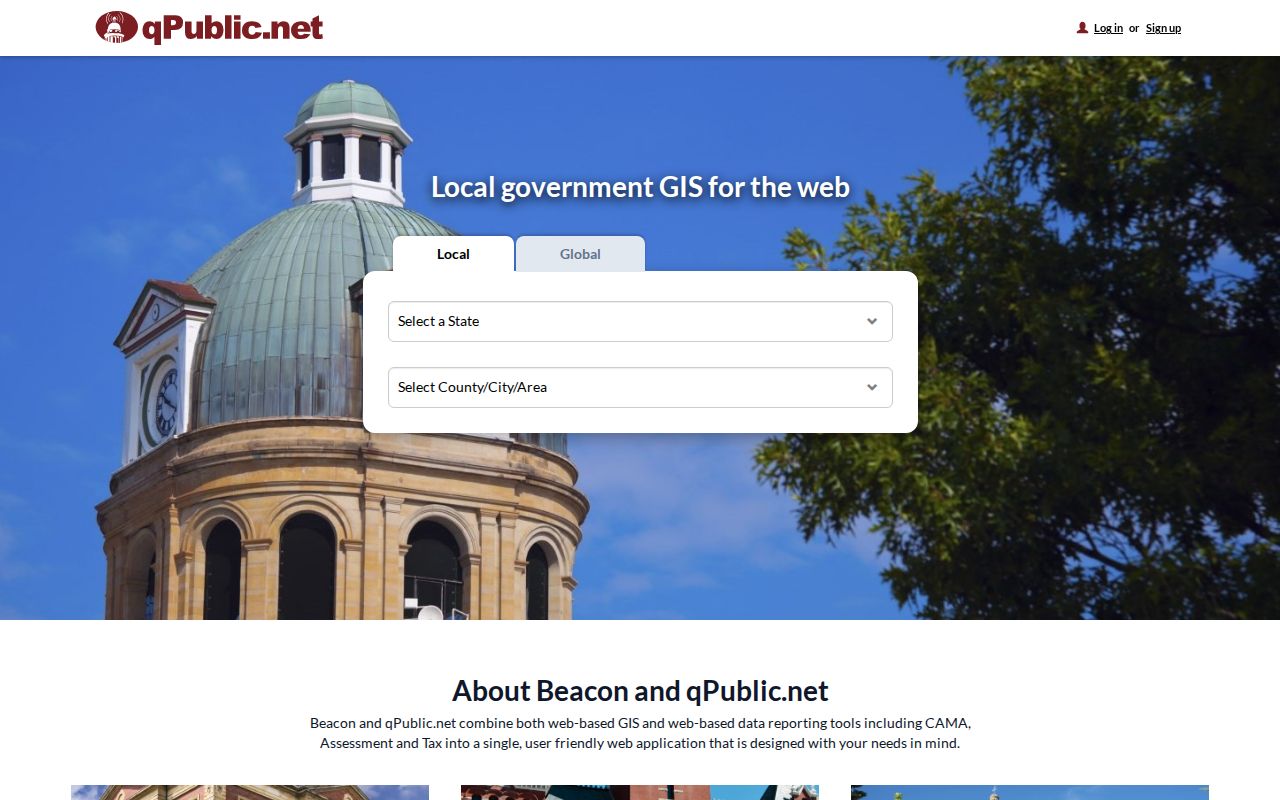
Treat that screen as a menu hint. Confirm the actual fields on the live Simpson application or with PVA staff.
| Search mode | Best input | Simpson status |
|---|---|---|
| Owner name | Exact personal, trust, or entity style | Ownership advertised; label unverified |
| Address | Situs street and number | Vendor supports it; local control unverified |
| Parcel ID | Number copied from an official record | Vendor supports it; format unverified |
| Alternate ID | Only an ID already shown locally | Local use unverified |
Owner Names in Simpson Searches
One owner search can pull up several accounts under a single spelling. It can also miss land held by a trust, an estate, a spouse, or a business indexed under a different style. Test surname and given-name order where the system permits. Retain initials. Search the full entity name. Same-name matches still need separating with legal description, address, and parcel references. For a corporate grantee, the Kentucky Business Entity Search can confirm the entity's legal name and filings. That protects the owner of record. A registered agent or principal office is not the parcel owner or the situs by itself; it is a cross-check on identity, not a land record.
What Simpson Search Results Show
The Simpson PVA states its certified roll carries ownership and available property characteristics. Check the live parcel card. Record only what the application actually displays.
| Owner line | Exact name and ownership style, if shown |
|---|---|
| Situs and mailing | Physical location versus notice address |
| Parcel account | Exact administrative key, if shown |
| Value and year | Assessment data, not a sale appraisal |
| Legal description | Lot/block or land description, if available |
| Sale reference | Date, amount, or deed link only if displayed |
A parcel card is not a deed image. A map is not a survey. The roll can also lag behind a recent sale, so confirm the latest conveyance through the County Clerk before treating the owner line as current title.
Why Simpson Results Can Lag
Simpson property is assessed as of January 1. A buyer who receives a deed after that date may not replace the prior owner on the same year's roll or bill. The PVA says it tries to use deed data to mail a bill to a new owner, while Kentucky revenue guidance still identifies the January 1 owner for the tax year.
Compare the roll year, bill year, deed execution date, and recording date. Contract terms may allocate payment between buyer and seller, but that private deal does not alter the public assessment date.
Date check. A newly recorded deed can be more current than Simpson County's January 1 owner line and current-year tax bill.
Confirm Simpson Search With Deeds
The County Clerk directs public land-record searches to eCCLIX. Search the exact owner style as grantee. That locates the acquisition deed. It carries the legal description and prior reference to earlier deed records. Search the same person as grantor to catch any later transfer. Mortgages, releases, liens, plats, and lis pendens can sit beside deeds in the recorder trail. The eCCLIX land-record entry is the starting point. Simpson's labels plus any online cutoff live inside the portal itself.
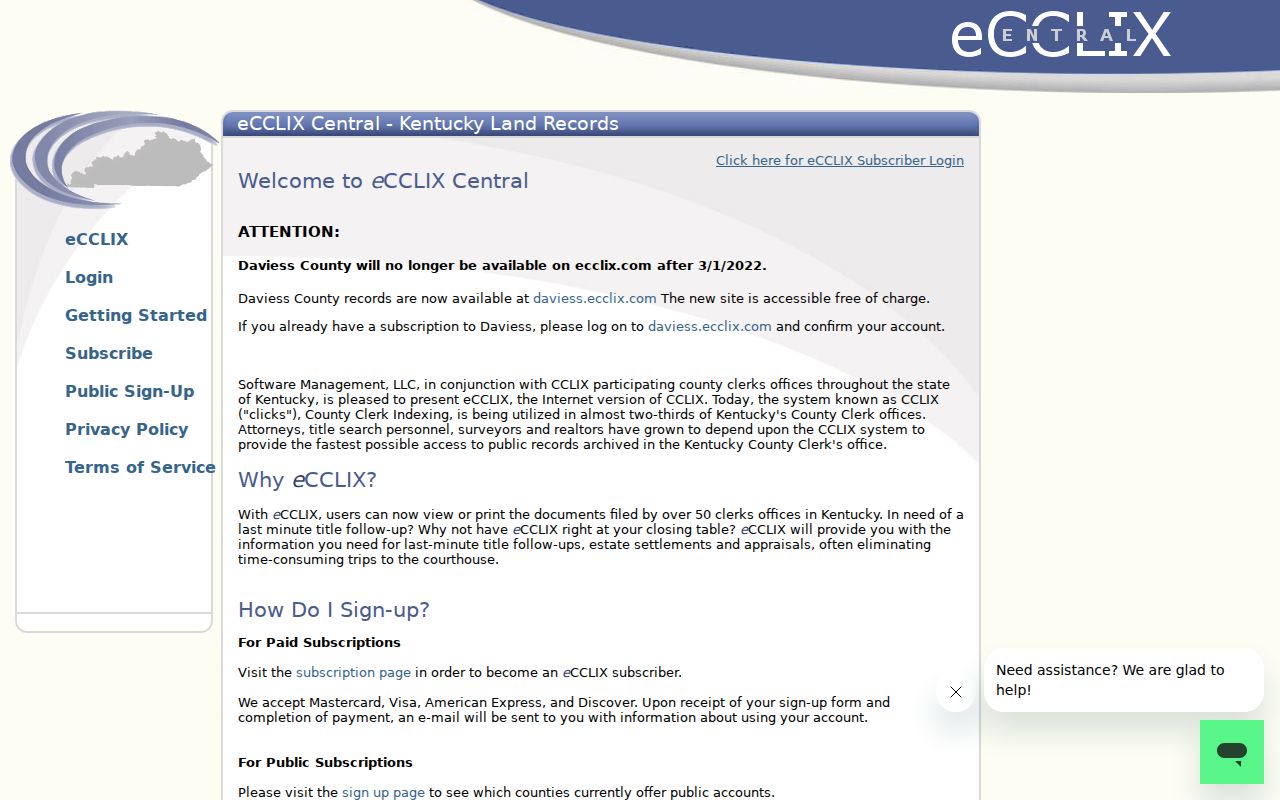
The portal is account based. A Clerk counter, mail request, or open-records request remains the fallback when the index or an image cannot be reached.
Parcel Keys Across Simpson Records
A parcel number is the cleanest administrative match once an official source supplies it. Simpson publishes no stated rule for character count, prefix, punctuation, or leading zeros. Copy the full value. Never convert it to a guessed pattern. The number may link the roll, the bill, and the map, but a deed may rest on party names, instrument references, and legal description instead.
- Parcel or APN
- An assessor account key, not a legal description.
- Situs address
- The physical location used to find the parcel.
- Owner of record
- The person or entity named on the dated record being read.
- Legal description
- The title language that identifies the land.
Simpson Tax and Permit Checks
The Sheriff's site routes current tax bills through PVDNet. Its search fields have no fixed labels. Wait for the portal itself to show. It accepts an address, a name, or a parcel number. Unpaid bills move to the County Clerk after April 15, 2026, under the 2025 notice. The Sheriff collects current amounts; the Clerk takes questions once a bill turns delinquent.
Planning records cover a different question. The Franklin-Simpson office posts a zoning map, PermitLink applications, and InspectNet inspection history reports. PermitLink offers no public address-result index, so request building history straight from the office. A permit or zoning file never proves ownership by itself.
When Simpson Portals Fail
Online access is only one channel. The PVA can identify an account by phone or at its Franklin office. The County Clerk answers land-record questions at the counter. It also publishes an open-records policy for written requests by delivery, mail, fax, or email. KRS 61.880 generally demands a response or written denial within five working days. KRS 61.874 sets the rules for inspection, copies, and fees.
For historic work, KDLA takes archive requests. It lists a four-to-six-week estimate plus an initial nonrefundable search and copy fee. The Simpson Archives and Museum keeps old deeds, tax books, court papers, wills, maps, and newspapers. These routes matter when a web index skips older volumes.
Compare Simpson Property Search Keys
Match the key to what you already know. An address pins down one location fast. An owner name groups related accounts. A parcel number gives the tightest administrative match. Every key can fail for a reason, so keep a backup handy.
| Search Key | Best For | Where It Works | Watch Out |
|---|---|---|---|
| Address | One known location | PVA; zoning map | Mailing address or changed street |
| Owner name | Accounts under one exact style | PVA; eCCLIX | Trusts, entities, initials, same names |
| Parcel number | Exact administrative account | PVA; bill system if enabled | Unknown local syntax |
Not a title search. A Simpson County property search finds public entries, but it does not guarantee clear title or settle a boundary. Use the recorded instruments and qualified professionals for those conclusions.
Resolve a Difficult Simpson County Property Search
A failed exact-address search often reflects formatting, not a missing parcel. Strip directional words and punctuation, then search the bare street number and road name. Confirm whether the address is a physical situs or an owner's mailing address. Franklin ZIP Codes 42134 and 42135 help with postal normalization. Neither one sets the city limits. A road can also cross the municipal edge. Weigh the PVA location, the Franklin zoning context, the deed description, and the official boundary record against each other.
Search every legally meaningful style when the owner is known. Keep initials, suffixes, joint-owner names, trust wording, estate wording, and full business names intact. Kentucky's Secretary of State entity search can confirm the proper legal style. It works for a corporation or LLC. The registered agent address is just an entity clue. Treat it as neither the parcel situs nor proof of land ownership.
Copy a parcel number exactly once an official one appears. Simpson County publishes no fixed public format, prefix, character count, or leading-zero rule. A shortened or reformatted value can break the link. It may cut the thread among the tax roll, the bill, and the map. In the Clerk system, keep the legal description and party name beside that key. Land records there may be indexed around instruments and people, not the assessor's account number.
For historical searches, work backward from the newest reliable reference. KDLA lists selected Simpson deed microfilm starting in 1819. The published runs have gaps. KDLA also lists tax assessment books from 1882 through 2003. Simpson was formed from Allen, Logan, and Warren Counties. The 1869 Logan County cut-off can push an early land search into a parent county. Record old road names, adjoining-owner calls, acreage, waterways, and prior-instrument references before switching jurisdictions.
Use the office fallback rather than guessing at a blocked form. PVA staff help identify an assessment account. The Clerk handles land records at the counter or through a specific written request. The Sheriff addresses the current bill. Planning explains zoning and permit custody. The Kentucky Open Records Act gives you leverage here. A custodian can provide inspection or an available standard copy even when a vendor interface refuses. Ask for an existing record, not a newly created ownership analysis.
Keep a short search log. Record rejected spellings, dates, account numbers, and offices contacted. That log prevents repeated dead ends and sharpens a written request. When two parcels share similar addresses, compare the legal description. Check the subdivision, lot, or acreage before carrying an owner name into the deed index. For a recent conveyance, compare the January 1 assessment owner with the latest recording date.
Confirm any final match with the office that keeps the record. Portal data can shift over time.